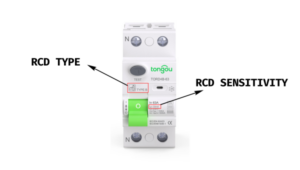
How to Choose 30mA, 100mA, or 300mA RCD Protection for Different Applications
How to Choose 30mA, 100mA, or 300mA RCD Protection for Different Applications When selecting an RCD, many buyers and installers focus first on the leakage
When people ask whether AC SPD and DC SPD are interchangeable, what they usually want to know is much simpler: which surge protection device should I use for my system, and what happens if I choose the wrong one?
That is the real question this article should answer.
In practical projects, surge protection is not chosen by appearance. It is chosen by system type, voltage side, and installation location. A building AC distribution board, a solar PV string, a battery DC side, and a telecom DC circuit do not face the same electrical conditions, so they should not be protected with the same SPD by default.
This is why the difference between AC SPD and DC SPD matters so much. The wrong choice may not only reduce protection performance, but may also create a real safety risk.
At the most basic level, AC SPD and DC SPD are designed for different electrical environments.
An AC SPD is used for alternating-current systems. These are the systems most people think of first: building mains, service entrances, AC distribution boards, and general AC-powered equipment in residential, commercial, or industrial settings.
A DC SPD is used for direct-current systems. Typical examples include solar PV string circuits, battery energy storage systems, telecom DC systems, and some industrial DC control applications.
This sounds simple, but it becomes more important as electrical systems become more mixed. A modern project may include both AC and DC sections at the same time. That means the installer is not just choosing “a surge protector,” but choosing the right surge protector for the right side of the system.
| System or location | Typical voltage side | Typical SPD choice |
|---|---|---|
| Building service entrance | AC | AC SPD |
| Residential or commercial AC distribution board | AC | AC SPD |
| Solar PV string side | DC | DC SPD |
| PV inverter AC output side | AC | AC SPD |
| Battery energy storage DC side | DC | DC SPD |
| Telecom 48V DC system | DC | DC SPD |
| Industrial DC control circuit | DC | DC SPD |
This table is the simplest way to understand the topic:
choose by system side, not by product appearance.
The short answer is that AC and DC do not behave the same way, and the SPD must be designed for the conditions it will actually face.
In an AC system, voltage and current alternate direction and repeatedly pass through zero. In a DC system, current flows in one direction and does not have that same natural zero-crossing behavior. That difference matters because it affects how the SPD handles stress, especially during abnormal conditions.
For AC systems, the surge protector is built for the characteristics of alternating current. For DC systems, the SPD must handle a constant-voltage environment and the different arc-handling challenges that can come with it.
That is why an AC SPD should not simply be treated as “close enough” for a DC circuit, and vice versa.
If the SPD does not match the system it is protecting, several things can happen:
-the SPD may not clamp the surge correctly
-the device may degrade too quickly
-the protection level may not match the actual circuit conditions
-in the worst case, the device may fail in a dangerous way instead of acting as reliable protection
This is the real reason people keep asking, “Can I use an AC SPD for DC?”
The answer is not just “no” because of a rule.
It is “no” because the system conditions are different enough that the wrong SPD may not behave safely or predictably.
A lot of selection mistakes happen because people focus on the product label before they focus on the system.
A better way to think about SPD selection is to ask these questions in order:
1. Is this part of the installation AC or DC?
2. Where is this SPD being installed: service entrance, distribution board, inverter output, PV string side, battery side, or control circuit?
3. Is this a single-side system, or does this project contain both AC and DC sections?
4. Does this project need one SPD type, or protection on both sides of the system?
This approach is much more useful than simply asking, “Which SPD is stronger?”
Surge protection is not about stronger or weaker in the abstract. It is about being correct for the system it is protecting.
This is where the article becomes more valuable than a basic question-and-answer page.
Many real installations do not live entirely on one side.
A solar PV system is a perfect example. The PV string side is DC, while the inverter output side and the building distribution board are AC. That means one project may need:
The same logic applies to some solar-plus-storage systems. The battery side may require DC-side protection, while the building distribution and downstream loads still rely on AC-side protection.
That is why a project should never be reduced to a single SPD decision too early.
A stronger version of this article should not stop at theory. It should also explain where people go wrong.
Mistake 1: Choosing by appearance
Two SPDs may look similar from the outside and still belong to completely different electrical environments.
Mistake 2: Protecting only the AC side in a mixed system
This is very common in solar projects. The AC panel gets protected, but the PV DC side is ignored.
Mistake 3: Treating one SPD as universal
A project that contains both AC and DC sections may require both AC SPD and DC SPD.
Mistake 4: Focusing only on the inverter
The inverter is important, but it is not the whole system. Surge protection may still be needed on the PV side, battery side, and building distribution side depending on the architecture.
Mistake 5: Thinking this is only about product category
It is not. It is about matching the protection device to the actual current type and installation side.
Selecting the right SPD is crucial for effective and safe operation:
1. Identify System Type: Is the circuit AC or DC? This is the first and most important distinction.
2. Determine Voltages: Note the nominal operating voltage (e.g., 230Vac, 400Vac, 600Vdc, 1000Vdc) and the Maximum Continuous Operating Voltage (MCOV / Uc) required for the SPD. The SPD’s MCOV/Uc rating must be higher than the system’s continuous operating voltage.
3. Consider the Application & Location: Is it for the main service entrance (requiring Type 1 or Type 2), a sub-panel (Type 2), or specific equipment (Type 3)? Is it for a specific application like Solar PV (requiring specific DC ratings and standards like IEC 61643-31 or UL 1449 PV)?
4. Check Surge Ratings: Look at parameters like Nominal Discharge Current (In), Maximum Discharge Current (Imax), or Impulse Current (Iimp for Type 1) to ensure the SPD can handle the expected surge levels for its location.
5. Verify Voltage Protection Level (Up): This indicates the residual voltage let-through during a surge. Lower Up generally means better protection, but it must be coordinated with the withstand voltage of the equipment being protected.
6. Consult Standards & Datasheets: Always ensure the SPD meets relevant safety standards (e.g., IEC 61643 series, UL 1449) and carefully read the manufacturer’s datasheet for specific ratings and application constraints.
Can I use an AC SPD on a DC circuit?
In general, no. AC SPD and DC SPD are designed for different electrical environments, and using the wrong type may lead to unreliable or unsafe protection.
Can I use a DC SPD on AC power?
That is also not something that should be assumed safe or correct. SPD selection should match the actual system type rather than rely on visual similarity or guesswork.
Does a solar PV system need both AC SPD and DC SPD?
In many cases, yes. The PV string side is DC, while the inverter output and building distribution side are AC, so mixed protection strategies are common.
What is the difference between surge protection for building power and surge protection for solar PV?
Building power protection is usually focused on the AC side. Solar PV systems often require surge protection on both the AC side and the DC side, depending on system layout.
When do I need both AC and DC surge protection?
You may need both when one installation contains both AC and DC sections, such as a solar PV system, solar-plus-storage system, or other mixed-power architecture.
Is battery storage surge protection different from ordinary AC panel surge protection?
Yes, it can be. Battery systems often include DC-side energy paths that should not be treated like ordinary AC distribution circuits.
Choosing the correct SPD doesn’t have to be complicated. At Tongou, we offer a comprehensive range of high-quality Surge Protection Devices designed and tested for specific applications.
Explore our robust AC SPD solutions for reliable protection of your mains power and AC distribution systems.
Find the right DC SPD specifically engineered for Solar PV systems, battery storage, and other demanding DC applications.
Need assistance selecting the perfect SPD for your project? Fill out the Contact Form below. We’re here to help ensure your systems are safely and effectively protected.

How to Choose 30mA, 100mA, or 300mA RCD Protection for Different Applications When selecting an RCD, many buyers and installers focus first on the leakage

Contactor vs Circuit Breaker vs Relay: What Should Control the Load? When you need to control a load, the real question is not which device
What Happens to a Smart Breaker or Smart Energy Meter After a Power Outage? A power outage does not affect every part of a smart
Tongou Project Campsite Energy Management System: Denmark Zigbee Case Study Denmark Campsite Energy Management System with Zigbee Smart Devices Managing electricity across a large campsite

To address any concerns regarding our logo update, please note that the EU trademarks “tongou” (Registration No. 018630309) and “Chayo” (Registration No. 019312969) are both owned by Changyou Technology (Zhejiang) Co., Ltd.
This logo update is only a visual upgrade and does not affect the ownership, validity, or exclusive use of the above trademarks. It also has no impact on product quality, performance, specifications, after-sales service, or business cooperation.
All products and services remain consistent and reliable as always.
Marine Economic Development Demonstration Zone, Wenzhou City, Zhejiang Province, China
Sales: [email protected]
After-sales: [email protected]
© 2026 Changyou Technology. All Rights Reserved.