How to Choose 30mA, 100mA, or 300mA RCD Protection for Different Applications
How to Choose 30mA, 100mA, or 300mA RCD Protection for Different Applications When selecting an RCD, many buyers and installers focus first on the leakage
Managing electricity across a large campsite is not just about visibility. Operators need stable control, reliable communication between distributed electrical points, and a system that can keep running smoothly in daily operation.
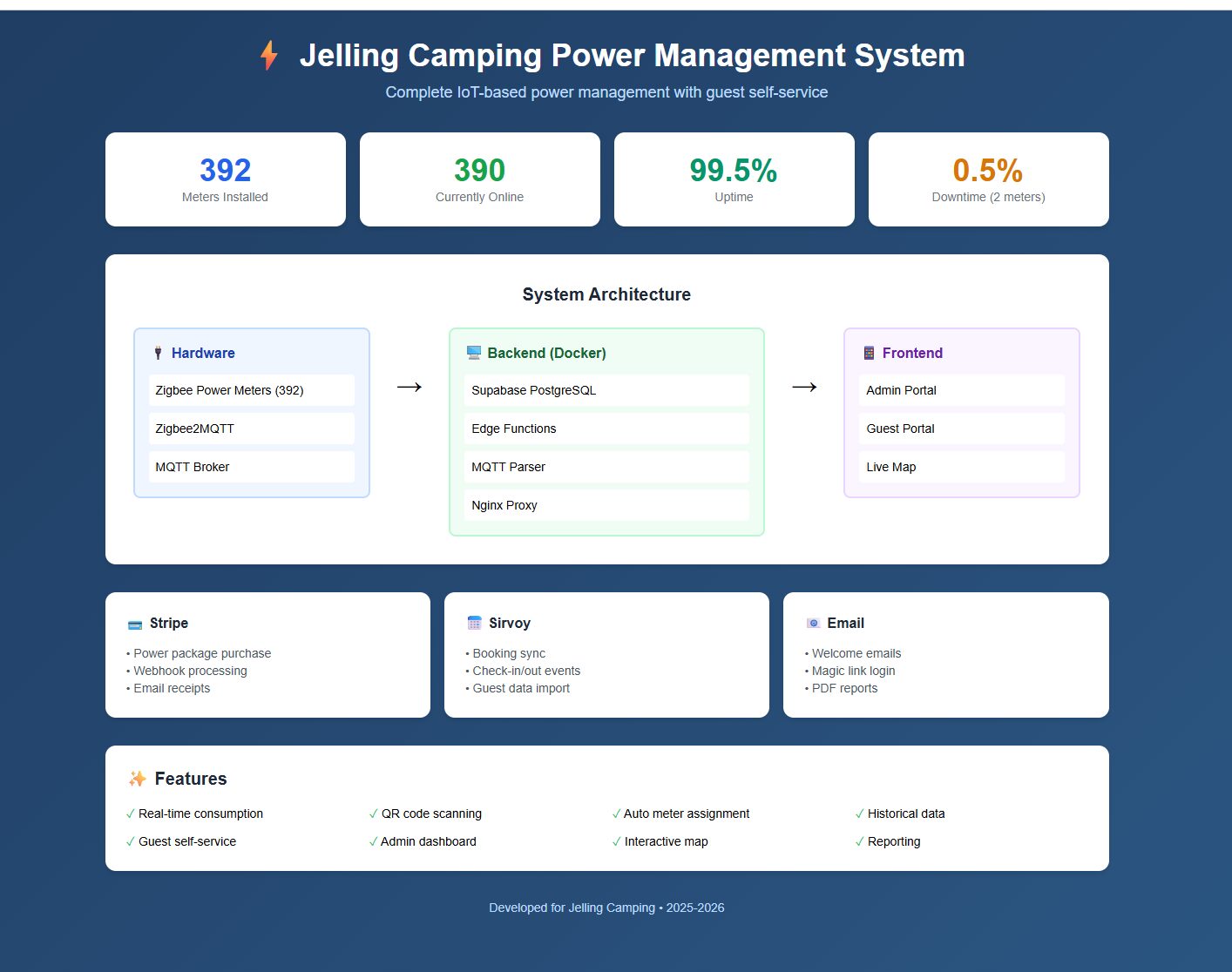
This Chayo Project shows how a campsite in Denmark built a local Zigbee-based energy management system centered on smart switching devices across 42 cabins and 350 camping pitches. By combining Zigbee smart switches, mesh communication, and a local control architecture, the project achieved high reliability, low operating cost, and practical scalability for real-world use.
For campsites, holiday parks, caravan parks, and similar outdoor accommodation sites, this case offers a practical example of how local energy management can be deployed without relying heavily on cloud infrastructure.
The site required a distributed energy monitoring system for a large outdoor environment with many separate electrical connection points. Traditional approaches based on Wi-Fi were not ideal because the deployment area was wide, device density was high, and long-term stability was more important than consumer-style connectivity.
The final system covered:
-42 cabins
-350 camping pitches
-392 distributed electrical points
From the beginning, the goal was not simply to connect devices. It was to build a workable energy management system that could support everyday operation, simplify control, and remain reliable as the site evolved.
A campsite energy management system helps operators monitor electricity consumption across cabins, camping pitches, and other distributed facilities. In practical use, this type of system can support:
*Real-time energy monitoring
*Visibility across multiple electrical points
*Easier fault detection
*Fairer electricity allocation or billing
*Simpler expansion as the site grows
Compared with small residential smart home systems, a campsite deployment has a very different requirement profile. It must remain stable across a larger outdoor area, handle many nodes at once, and reduce maintenance effort over time.
That is why the choice of communication protocol and system architecture is critical.
Zigbee was selected because it better matched the operational needs of the site.
Its advantages in this project included:
-Mesh networking for wider distributed coverage
-Low-power communication suited to many connected nodes
-Easier scalability across a large installation
-Stronger local communication independence
-Practical suitability for energy monitoring rather than high-bandwidth data transfer
For campsite and campground deployments, Zigbee offers a good balance between stability, flexibility, and deployment cost. It is especially useful when the goal is reliable local communication across many monitoring points.
The system was built around a local-first architecture designed for dependable operation.
Core system components included:
1, DIN-rail Zigbee smart energy meters
2, Zigbee Ethernet gateways
3, Zigbee mesh communication
4, local Linux-based server
5, local data processing and management interface
Chayo Devices with ZIGBEE2MQTT: operation documentation page
This architecture allowed the site to monitor power usage across all major outlets while keeping the system independent from cloud platforms. It also made troubleshooting, expansion, and maintenance more manageable for long-term use.
The result was not just a collection of connected devices, but a practical campground energy monitoring system with real operational value.
A key principle of the project was local-first design.
Instead of depending fully on external cloud services, the system processed and managed data locally. This approach provided several advantages:
Continued operation even if internet access was unstable
Faster local response and more predictable control
Lower long-term software and subscription cost
Better control over system data and architecture
Reduced risk of service interruption caused by third-party cloud changes
For campsite operators, this is important. A monitoring system should support operations quietly in the background, not create a second layer of uncertainty.
The project delivered strong practical results:
These outcomes made the system economically attractive as well as technically reliable.
For operators, the value was not only in monitoring electricity usage. It was also in creating a clearer and more manageable electrical infrastructure across the site. A system like this can support future workflows such as usage visibility, maintenance planning, and more transparent electricity billing.
Although this project was developed for a campsite in Denmark, the same architecture can be relevant in many similar scenarios.
Any site with multiple electrical points and a need for stable local energy monitoring can benefit from a similar system design.
A practical campsite or campground energy monitoring system may include:
Depending on the site layout and management goals, the system can be adapted for pure monitoring, energy visibility, or future integration with smarter control and operational workflows.
Many energy monitoring articles stay at the concept level. This project is different because it demonstrates a real deployment with clear scale, clear architecture, and measurable operational results.
It shows that a campsite energy management system does not need to rely on heavy cloud infrastructure or complex enterprise platforms to be effective. With the right combination of Zigbee smart meters, local control, and practical engineering design, it is possible to build a stable and scalable system for real-world outdoor operation.
For operators looking for a dependable way to monitor distributed electricity usage, this project offers a proven direction.
Zigbee is often better suited to large distributed monitoring environments because it uses mesh networking and low-bandwidth communication. In sites with many separated power points, this can improve stability and simplify expansion.
Yes. A local-first architecture can continue operating during internet issues, reduce subscription costs, and keep the system under local control.
A typical deployment may include smart energy meters, communication gateways, smart protection devices, and a local or central management platform.
If you are planning an energy monitoring system for a campsite, campground, caravan park, or RV park, the right architecture matters as much as the devices themselves.
Chayo can support projects that require:
Contact us to discuss a solution that fits your site layout and operational goals.
Johnson Lim is the General Manager of Changyou Technology and has over 10 years of experience in circuit protection technology and residential electrical safety. He is committed to developing and producing safer and smarter electrical products.

How to Choose 30mA, 100mA, or 300mA RCD Protection for Different Applications When selecting an RCD, many buyers and installers focus first on the leakage

Contactor vs Circuit Breaker vs Relay: What Should Control the Load? When you need to control a load, the real question is not which device
What Happens to a Smart Breaker or Smart Energy Meter After a Power Outage? A power outage does not affect every part of a smart
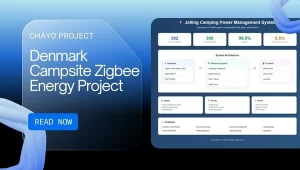
Chayo Project Campsite Energy Management System: Denmark Zigbee Case Study Denmark Campsite Energy Management System with Zigbee Smart Devices Managing electricity across a large campsite

To address any concerns regarding our logo update, please note that the EU trademarks “tongou” (Registration No. 018630309) and “Chayo” (Registration No. 019312969) are both owned by Changyou Technology (Zhejiang) Co., Ltd.
This logo update is only a visual upgrade and does not affect the ownership, validity, or exclusive use of the above trademarks. It also has no impact on product quality, performance, specifications, after-sales service, or business cooperation.
All products and services remain consistent and reliable as always.
Marine Economic Development Demonstration Zone, Wenzhou City, Zhejiang Province, China
Sales: [email protected]
After-sales: [email protected]
© 2026 Changyou Technology. All Rights Reserved.