RCBO Trips at Night? Causes, Diagnosis, and Lasting Fixes
RCBO Trips at Night? Causes, Diagnosis, and Lasting Fixes Already know what an RCBO is? Great. This page skips the basics and focuses on nocturnal
When it comes to powering our homes, the choice between alternating current (AC) and direct current (DC) is crucial. While both types of electricity have their uses, AC has become the standard for residential power supply.
Alternating current (AC) is a type of electrical current where the flow of electric charge periodically reverses direction. In an AC system, the voltage alternates between positive and negative, generally in a sinusoidal wave form, which allows for efficient transmission of electricity over long distances. AC is commonly used for household and industrial power supplies.
Direct current (DC) is a type of electrical current where the flow of electric charge is only in one direction. In a DC system, the voltage remains constant over time. DC is typically used in battery-powered devices, small electronics, and certain industrial applications. While it is effective for short-distance power transmission, it is not as efficient as AC for long-distance transmission.
One of the primary advantages of AC over DC is its efficiency in power transmission over long distances. AC voltage can be easily transformed to higher or lower levels using transformers, which allows electricity to be transmitted at high voltages (reducing energy loss) and then stepped down to safer, usable voltages for homes.
Crucial to the voltage conversion process, transformers work only with AC. This capability to step up and step down voltages with minimal energy loss makes AC the ideal choice for grid distribution.
The infrastructure for AC power generation and distribution is already well-established and standardized globally. This makes the widespread use of AC more economically viable compared to implementing a parallel DC system.
AC power is often considered safer than DC in certain applications. For example, AC can be more easily interrupted by circuit breakers. Meanwhile, DC requires more robust and complex mechanisms to safely interrupt high currents and voltages.
Generating AC power is generally cheaper and simpler than generating DC power. AC generators, like those used in power plants, have fewer moving parts and are less maintenance-intensive than their DC counterparts.
Most household appliances are designed to run on AC power. Transitioning to DC power would necessitate a complete overhaul of residential wiring and appliances, which would be economically impractical.
Q: What happens if you use AC on a device designed for DC?
A: Using AC on a device designed for DC can lead to malfunction or damage. DC devices are not built to handle the alternating nature of AC, which can cause overheating or short circuits and potentially damage the device.
Q: What are the advantages of AC over DC?
A: AC is more efficient for power transmission over long distances, can be easily transformed to different voltage levels, and is safer to interrupt. Additionally, its well-established infrastructure makes AC more cost-effective.
Q: Can DC be used for home power supply?
A: Although technically possible, using DC for home power supply is impractical due to the current AC infrastructure, higher transmission losses, and compatibility issues with most household appliances.
Q: How can I protect my home’s AC system?
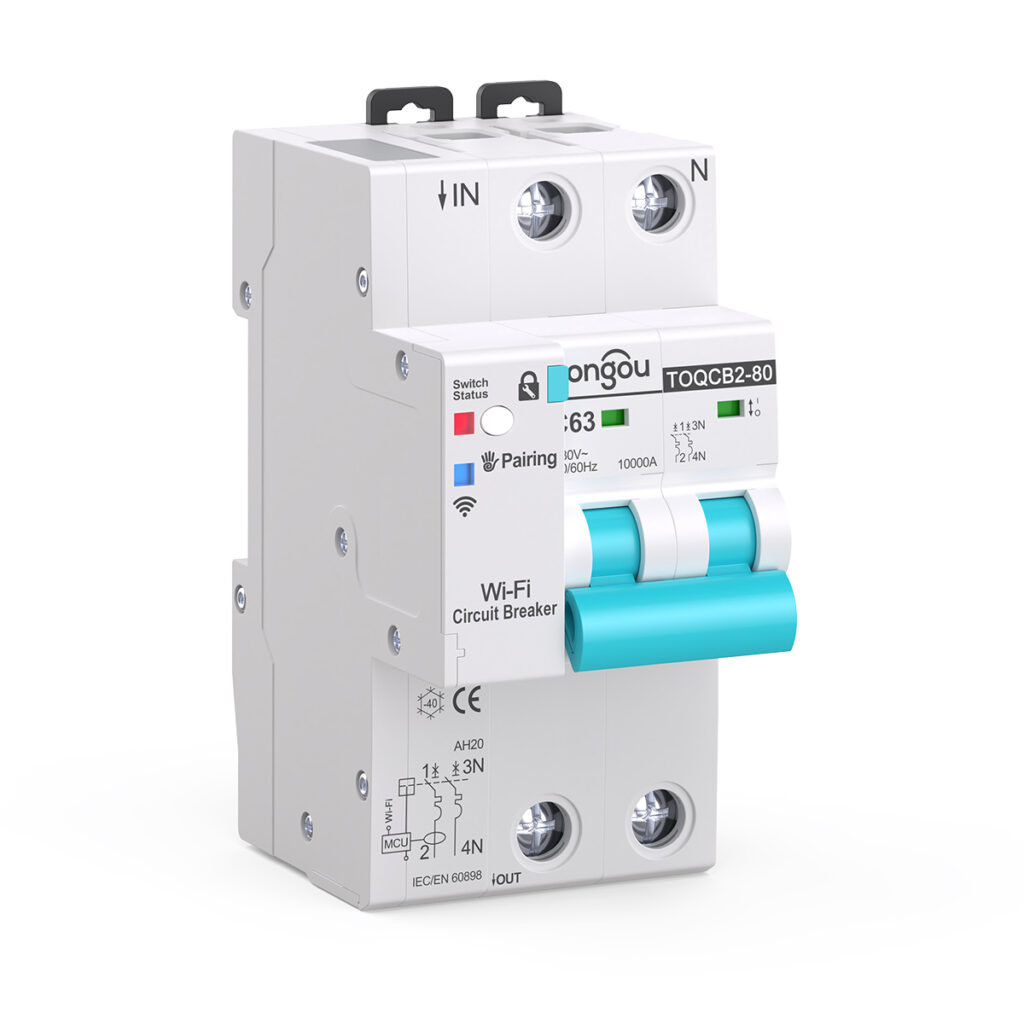
A: Use high-quality circuit breakers, such as those offered by Tongou, to protect your home’s electrical system. These breakers help prevent overloads and electrical faults by interrupting the flow of electricity when a problem is detected.
Installing reliable circuit breakers is crucial for maintaining the safety and efficiency of your home’s AC system. Tongou circuit breakers are engineered to offer superior protection against electrical faults, short circuits, and overloads. By automatically interrupting the current during fault conditions, these circuit breakers ensure that your electrical system remains safe and operational.
Regular maintenance and timely upgrades of circuit breakers can prevent electrical hazards and extend the lifespan of your home’s wiring and appliances. High-quality circuit breakers such as those from Tongou are essential investments in the safety and longevity of your home’s electrical infrastructure.

RCBO Trips at Night? Causes, Diagnosis, and Lasting Fixes Already know what an RCBO is? Great. This page skips the basics and focuses on nocturnal

MCB B/C/D Curves in Practice: How Inrush Current Shapes Your Choice This guide assumes you already know what an MCB is. If you need a

SPD Coordination for Solar PV and EV Charging: Where to Place Type 1/2/3 Already know the difference between Type 1/2/3 and AC vs DC SPDs?

MCB vs MCCB: A Practical Guide to Icu/Ics and IEC 60898 vs 60947-2 This guide assumes you already know what a breaker is. If you
tongou was established in 1993 and is the trademark of Changyou Technology. We position ourselves as providers of intelligent product solutions for high and low voltage electrical systems, taking on solving customers’ pressures and challenges as our responsibility and creating value for them. We utilize intelligent products to serve global customers, making life smarter and more convenient to benefit your life.
Paidong Industrial Zone Qiligang,Yueqing City,Zhejiang province,China.
Sales: [email protected]
After-sales: [email protected]
© 2025 Changyou Technology. All Rights Reserved.