Marine Economic Development Demonstration Zone, Wenzhou City, Zhejiang Province, China
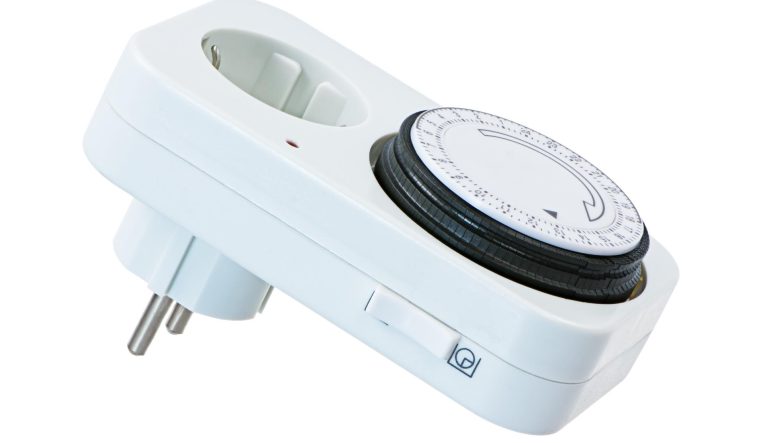
Timers are widely used across many industries to control actions based on time.
From simple countdown functions to complex automation schedules, timers play a critical role in modern electrical, digital, and smart systems.
In general terms, a timer is a device or function designed to measure, control, or trigger events after a preset time interval.
Timers are commonly found in electrical control systems, home automation, industrial equipment, and even software applications.
This article provides a comprehensive explanation of timers — including how timers work, the different types of timers available, their functions, and real-world applications.
Special attention is given to timer switches used in electrical systems and the growing role of smart timers in modern automation.
Nowadays, saving energy is very important. Avoiding the waste of electric energy is something we can do and can do. The use of timer switches allows us to avoid unreasonable loss of electric energy through time management.
A timer is a device or system that controls actions based on a defined time interval.
Unlike a clock, which continuously displays the current time, a timer is designed to start, stop, delay, or repeat actions after a preset duration.
Timers can be implemented in many forms, including mechanical devices, electronic circuits, software programs, and smart connected systems.
In electrical applications, timers are commonly used to automate switching operations, improve energy efficiency, and ensure consistent operation of equipment.
Because of their flexibility, timers are essential components in residential, commercial, and industrial control systems.
The basic function of a timer is to measure a time interval and trigger an action once that interval is reached.
This process typically involves a time reference, a control mechanism, and an output signal.
When the preset time expires, the timer activates or deactivates a connected circuit, relay, or control signal.
Depending on the design, timers can operate in delay-on, delay-off, or cyclic modes.
Mechanical timers rely on physical components such as springs, gears, and cams to measure time.
These timers are simple, reliable, and commonly used in basic applications.
Electronic timers use electronic circuits or microcontrollers to achieve higher accuracy and flexibility.
They support programmable schedules, multiple timing modes, and integration with digital control systems.
A timer switch is an electronic device that turns a circuit on or off after a preset time. Depending on the timing switch, it will work electronically or mechanically. Some timer switches also have other additional functions.
There are many kinds of timing switches, some can be installed and embedded in the wall, and some are rail-type placed on the rail. In the application, the control of the use time of lights, exhaust fans, and other equipment can be formulated.
Therefore, the function of the timer switch is to prevent the equipment from running when it is not needed, so as to reduce the waste of electric energy and save the user’s money.
In today’s smart home construction, the smart timer switch can provide functions such as remote wireless control, remote adjustment of time, and recording of real-time power consumption, which increases the convenience of actual use, and also has other functions such as over-current protection and under-voltage protection.

Although timers, clocks, and stopwatches all relate to time, they serve different purposes.
A clock continuously displays the current time and is mainly used as a reference.
A stopwatch measures elapsed time between a start and stop action.
A timer, on the other hand, is designed to control actions based on a predefined duration.
Understanding these differences helps users select the correct solution for automation, measurement, or time reference needs.
| Feature | Timer | Clock | Stopwatch |
|---|---|---|---|
| Main Function | Control actions | Display current time | Measure elapsed time |
| Typical Use | Automation & control | Time reference | Testing & sports |
| Output Action | Yes | No | No |
There are four main types of timer switch: Mechanical Timer Switch, Digital Timer Switch, Astronomical Timer Switch, and Smart Timer Switch.
Mechanical timer switches are also known as analog or manual timer switches. The essence is to track time-based on springs. This switch is relatively simple, easy to use, and relatively durable. On some ovens, there are time knobs like this one.
This kind of timing switch works manually. When setting the timing, according to different products, some products can be set for a longer time.
Digital timer switches work through programs and are programmable, so they have a variety of options and are compatible with different usage scenarios. This type of switch can be set to cycle on and off multiple times over a period of time.
Some new products with high configuration will have password protection and light sensors to identify the actual size of the light source in the surrounding environment and take corresponding measures. There are also other configurations of digital timer switches that can be connected to mobile devices for remote control.
This type of timer switch has a variety of function options and can be used in a wide range of applications.
Astronomical timer switches are similar to digital timer switches, but the two work using different systems.
This type of switch has an innovative built-in technology that can accurately calculate the time of sunrise and sunset. Therefore, the astronomical timer switch controls the device according to the calculated data and is widely used in application scenarios that are more dependent on sunrise and sunset, such as lighting systems.
The smart timer switch is a device that can remotely control lights or other electrical switches through a mobile phone through a wireless network.
Smart timer switches are more energy-efficient than conventional timer switches, and also provide a variety of customized content, and can also be used in conjunction with other smart home devices. For users who want to improve energy efficiency and increase life convenience, smart timer switch is a very fitting tool and a step to start automating appliances.
1. Timer switch for the ringtone. School bells can ring on time before and after lessons.
2. Timer switch for the water pump. The irrigation water pump on the grass can be set to turn on and off at regular intervals through a timer switch.
3. Timer switch for the lights. Public buildings and street lights in the city can be controlled by astronomical timer switches, turning off the lights when it is bright and turning them on when it is dark.
4. Timer switch for the fan. The ventilation fans used in special places with needs can use intelligent timing switches, which can be turned on and off remotely when needed.
5. Timer switch for the heating system. The heating system can use a timer switch with a temperature sensor. Keeps the target area at a more comfortable temperature without more human intervention.
6. Timer switch for the fence and gate. In some places, in order to prevent people from entering within the unallowed time, time switches can be used to control electronic fences and gates.
7.Timer switch for pool. Pool timer is a device designed to control the operational scheduling of pool pumps and other pool-related equipment, ensuring that they run for specific periods of time to maintain water cleanliness and overall pool health.
The timing switch is basically designed as an energy-saving type, and the power consumption is not high. Most timer switches consume no power when they are off, and some timer switches use a small amount of power to power their internals when they are off.
There are three advantages to using a timer switch: Improve Convenience, Improve Electricity Safety, and Save Electricity Cost.
Turning lights on and off is not complicated, but it is cumbersome, because most of us have to go to the wall to press the switch, and sometimes forget to turn off the lights because of work or falling asleep. With the light timer switch, there is no such trouble. You can set the running time of the device once and for all, and then you don’t have to worry about the lighting no matter what you do afterward. Equipment such as air conditioners and water heaters can improve the convenience of product use by using time switches.
Sometimes, when we go out in the morning and come back in the evening, the house is dark, and we might bump into something and fall on the way to press the switch. For smart timer switches, this is not a problem at all. You can set the time to turn on the lights in advance, or you can use the mobile app to control the smart timer switch to turn on the lights through WiFi at the door.
In life, if some electrical appliances are not turned off for a long time due to negligence, it is very dangerous. Appliances such as ovens, for example, have the potential to cause electrical fires. In this case, the purpose of using the timer switch is to control the running time of the electrical equipment, so as to avoid more serious consequences caused by the equipment working for a long time.
Because of negligence, if the electric light or air conditioner is turned on for a long time, the number of the electricity bill will be higher than usual, which is a waste of money. After using the timer switch, you don’t have to worry about these things. You can easily set the usage time, reduce the waste of electric energy, and save some money.
The product TO-Q-SY2 is a smart relay switch with a timing function installed on the guide rail. The following are the pairing operation and function settings of the TO-Q-SY2 smart switch.
What is a timer used for?
A timer is used to control actions based on time, such as switching devices on or off automatically.
What is the difference between a timer and a stopwatch?
A timer controls actions after a set time, while a stopwatch measures elapsed time.
Are timers mechanical or digital?
Timers can be mechanical, electronic, or software-based, depending on the application.
What is a smart timer?
A smart timer connects to apps or automation systems, allowing remote control and scheduling.
How does a timer switch work?
A timer switch activates or deactivates an electrical circuit based on a preset schedule or delay.
The use of the timer switch can improve convenience, improve electricity safety, and save users money. A variety of timing switches can be flexibly applied to different scenarios, which helps to build an energy-saving, convenient, and safe environment.
| M | T | W | T | F | S | S |
|---|---|---|---|---|---|---|
| 1 | ||||||
| 2 | 3 | 4 | 5 | 6 | 7 | 8 |
| 9 | 10 | 11 | 12 | 13 | 14 | 15 |
| 16 | 17 | 18 | 19 | 20 | 21 | 22 |
| 23 | 24 | 25 | 26 | 27 | 28 | 29 |
| 30 | 31 | |||||

The EU trademark “tongou” (Registration No. 018630309) is owned by Changyou Technology (Zhejiang) Co., Ltd. We position ourselves as providers of intelligent product solutions for high and low voltage electrical systems, taking on solving customers’ pressures and challenges as our responsibility and creating value for them. We utilize intelligent products to serve global customers, making life smarter and more convenient to benefit your life.
Marine Economic Development Demonstration Zone, Wenzhou City, Zhejiang Province, China
Sales: [email protected]
After-sales: [email protected]
© 2026 Changyou Technology. All Rights Reserved.

 English
 Русский
 Español
 Français
 Deutsch