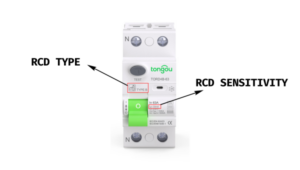
How to Choose 30mA, 100mA, or 300mA RCD Protection for Different Applications
How to Choose 30mA, 100mA, or 300mA RCD Protection for Different Applications When selecting an RCD, many buyers and installers focus first on the leakage
Already know the difference between Type 1/2/3 and AC vs DC SPDs? Perfect. This guide focuses on placement, parameters (Uc/MCOV, Up, TOV), and real-world coordination for PV and EV applications.
Type 1 at the service entrance (lightning current).
Type 2 at main/sub-distribution boards.
Type 3 at sensitive end equipment (short leads).
PV DC side requires DC-rated SPDs matched to string voltage (Uc/MCOV).
Keep leads short and reference a solid earth/PE; coordination matters more than “just picking a type”.
Uc / MCOV (Maximum Continuous Operating Voltage): Must exceed the system’s nominal and any temporary overvoltage (TOV).
Up (Voltage Protection Level): Let-through voltage during surge. Lower is better for sensitive equipment, but ensure coordination.
In / Imax: Surge current handling capability (repetitive vs maximum).
Response mode: MOV, GDT, combined stages. DC PV SPDs often combine elements to handle continuous DC bias.
Protects against direct lightning currents or very high surge levels.
Install close to the main incomer.
Bonding: solid PE connection; lead length ≤ 0.5 m preferred (phase + neutral + PE).
Handles residual surges after Type 1 and switching surges within the facility.
Place at the main panel and any sub-panel feeding sensitive or long-run circuits.
At or very near sensitive devices (e.g., EV wallbox electronics, control panels).
Keep connection leads extremely short; use coordinated devices so Type 3 isn’t overstressed.
Array/combiner box: DC Type 2 SPD selected by array nominal and open-circuit voltages (e.g., 600 V / 1000 V / 1500 V).
Inverter DC input: Additional DC SPD if cable runs are long or local codes demand.
Inverter AC output: Treat as an AC distribution point—Type 2 on the AC side.
Ensure correct polarity, earthing scheme (TT/TN/IT), and check inverter manufacturer guidance.
Upstream panel: Type 2 AC SPD on the EV branch feeder.
Local protection: If the EVSE electronics are highly sensitive, add Type 3 close to the unit (very short leads).
Coordination with RCD Type A/B/EV is essential—avoid nuisance tripping by keeping earth reference low impedance.
| System | Nominal | Typical Uc/MCOV Choice |
|---|---|---|
| Single-phase | 230 V | 275 V AC |
| Three-phase | 400/230 V | 320–350 V AC (phase-N), 440–480 V AC (phase-phase) |
| North America split-phase | 120/240 V | 150/275 V AC |
Choose Uc ≥ 1.1–1.2× nominal and consider TOV scenarios (e.g., lost neutral, ground faults).
| PV String Voc (cold) | Typical Uc/MCOV DC |
|---|---|
| ≤ 600 V | 600–700 V DC |
| ≤ 1000 V | 1000–1200 V DC |
| ≤ 1500 V | 1500–1700 V DC |
Always check Voc at lowest design temperature and follow manufacturer/DC code guidance.
Keep the total lead length (line → SPD → PE) as short and straight as possible (target ≤ 0.5 m).
Avoid sharp bends; use star-point bonding near the panel earth bar.
In PV arrays, ensure equipotential bonding between frames, DC combiner, and inverter earth to minimize potential differences.
Type 1 at service entrance (TN-C-S supply).
Type 2 at main distribution board; Type 2 at sub-panel feeding garage/EV.
PV DC Type 2 in combiner; AC Type 2 at inverter AC output panel.
Type 3 local protection at EV wallbox/control electronics (short leads).
Type 1 (AC) at service entrance (lightning-exposed site).
Type 2 (AC) at floor distribution boards.
Type 2 (DC) at each string combiner; consider additional DC SPD near inverter if cable runs are long.
Sensitive PLC/SCADA panels get local Type 3.
Periodically check status indicators and thermal disconnects on MOV-based SPDs.
Log surge events if modules provide signaling contacts; replace modules that indicate failure.
Inspect connections for discoloration/looseness—heat equals impedance equals poorer protection.
Q1. Can one SPD cover both AC and DC?
Use SPDs rated for the specific system. DC-rated SPDs are not interchangeable with AC types unless the datasheet explicitly allows it.
Q2. Do I still need Type 3 if I have Type 1+2?
Yes, if the end equipment is sensitive and cable runs are long. Type 3 protects the last meter.
Q3. Does an EV charger need DC SPD?
The AC side typically uses AC Type 2; follow the EVSE manufacturer’s recommendations. If DC fast charging is used, check system-specific SPD requirements.
Q4. What’s the most common installation error?
Long, looped leads to PE. Keep them short and straight.
Johnson Lim is the General Manager of Changyou Technology and has over 10 years of experience in circuit protection technology and residential electrical safety. He is committed to developing and producing safer and smarter electrical products.

How to Choose 30mA, 100mA, or 300mA RCD Protection for Different Applications When selecting an RCD, many buyers and installers focus first on the leakage

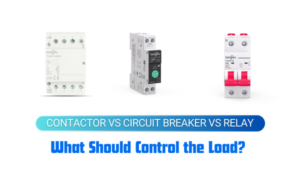
Contactor vs Circuit Breaker vs Relay: What Should Control the Load? When you need to control a load, the real question is not which device
What Happens to a Smart Breaker or Smart Energy Meter After a Power Outage? A power outage does not affect every part of a smart
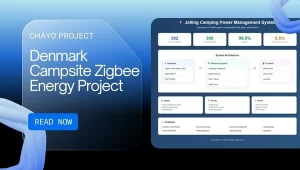
Chayo Project Campsite Energy Management System: Denmark Zigbee Case Study Denmark Campsite Energy Management System with Zigbee Smart Devices Managing electricity across a large campsite

To address any concerns regarding our logo update, please note that the EU trademarks “tongou” (Registration No. 018630309) and “Chayo” (Registration No. 019312969) are both owned by Changyou Technology (Zhejiang) Co., Ltd.
This logo update is only a visual upgrade and does not affect the ownership, validity, or exclusive use of the above trademarks. It also has no impact on product quality, performance, specifications, after-sales service, or business cooperation.
All products and services remain consistent and reliable as always.
Marine Economic Development Demonstration Zone, Wenzhou City, Zhejiang Province, China
Sales: [email protected]
After-sales: [email protected]
© 2026 Changyou Technology. All Rights Reserved.