How to Choose 30mA, 100mA, or 300mA RCD Protection for Different Applications
How to Choose 30mA, 100mA, or 300mA RCD Protection for Different Applications When selecting an RCD, many buyers and installers focus first on the leakage
As more low-voltage DC systems appear in solar battery setups, RV power systems, marine installations, telecom backup power, and off-grid projects, users are looking for better ways to control and manage DC circuits. In many of these applications, traditional switching methods are still functional, but they are often limited to local manual operation.
This is where a DC smart switch can add value.
A DC smart switch should be understood as an intelligent control solution for selected DC circuits. Its role is not to replace a traditional DC circuit breaker, but to make low-voltage DC systems easier to operate, easier to monitor, and easier to integrate into a smarter energy management strategy.
A DC smart switch is a switching device designed for low-voltage DC systems that adds functions such as remote ON/OFF control, timer settings, app-based operation, automation, and selected monitoring features.
In practical use, it is best viewed as a smart control component. It can make certain DC loads or branches more flexible and easier to manage, especially in systems where users want remote access or scheduled control.
However, this kind of product should not be confused with a dedicated DC protection device. Its value lies in smart operation and intelligent circuit management, not in replacing the protective role of a properly rated DC breaker.
In many low-voltage DC applications, users do not only want basic switching. They also want more convenient and more intelligent control.
For example, they may want to:
-remotely turn a DC circuit on or off
-schedule selected battery-fed loads
-manage non-essential circuits more conveniently
-improve control visibility in a battery-based system
-integrate a DC branch into a broader smart energy setup
These are the kinds of tasks where a DC smart switch can contribute. It does not change the protection foundation of the system, but it can improve the way the system is controlled and operated in daily use.
In small solar battery systems and off-grid setups, users often want more control over selected DC loads. A smart switch can help manage battery-fed circuits more conveniently through app control, remote switching, or timer logic.
This is especially useful for small battery systems where users want to improve load management without turning the whole installation into a highly complex control system.
The key point is that the DC smart switch contributes on the control side of the system. The circuit still needs properly selected DC protection devices where protection is required.
RV systems are one of the most practical applications for a DC smart switch. Many RV users want easier control of battery-fed circuits, lighting branches, auxiliary equipment, or selected non-essential loads.
In this kind of setup, a smart switch can provide:
-remote switching
-timer-based control
-easier energy-use management
-more convenient operation when the battery area is not easy to access
Again, this is a smart control benefit, not a protection replacement.
In marine systems, selected low-voltage DC branches may benefit from more flexible control. A smart switch can simplify operation for auxiliary circuits and improve day-to-day convenience, especially where manual access is inconvenient.
Its role here is similar: better switching and smarter control for selected branches, while protective functions remain the job of the appropriate DC protection devices.
In 48V DC telecom and backup applications, a smart switch can help with branch-level remote control, scheduled switching, and system management.
This is one of the more credible application areas because the value is operational rather than theoretical. In these systems, users often care about reliability, access, and easier control logic. A DC smart switch can contribute to those goals on the control side of the system.
A DC smart switch can also be useful in smaller DC branches such as LED lighting circuits, signage, or auxiliary battery-powered loads that benefit from remote switching or scheduled operation.
These are not always headline applications, but they are realistic and support the broader idea that the device is most valuable where control convenience and intelligent operation matter.
| Scenario | System voltage & current | Recommended DC smart switch features |
|---|---|---|
| Solar PV + battery bank (off-grid cabin) | 24 V / 48 V, 20–63 A | Remote DC battery disconnect, over/under-voltage protection, energy monitoring for each DC string. |
| RV / camper van power system | 12 V / 24 V, 10–40 A | App control, scheduling (night mode), remote DC load disconnect switch for lights and sockets. |
| Marine / boat DC circuits | 12 V / 24 V, 10–50 A | Corrosion-resistant enclosure, fast remote DC battery shut-off in emergency situations. |
| Telecom DC rack / base station | 48 V DC, 20–63 A | Reliable 48 V DC smart switch, current and voltage monitoring, alarm notifications on faults. |
| DC LED lighting and signage | 12–48 V, 5–20 A | Timer function for automatic DC lighting control, energy saving schedules, remote diagnostics. |
| Small DC EV charger / DC wallbox accessories | 48–80 V (model-dependent) | Integration with existing smart home systems, protection against over-current and reverse polarity. |
A DC smart switch and a DC circuit breaker should not be treated as interchangeable devices, because they serve different purposes in a real DC system.
A DC circuit breaker is primarily a protection device. Its job is to provide electrical protection and safe isolation for the circuit. In battery systems, RV electrical systems, marine DC circuits, and telecom backup installations, the breaker remains an essential part of the protection design.
A DC smart switch, by contrast, is better understood as a control device. In practical applications, it is used to add functions such as remote ON/OFF control, timer settings, app-based operation, and smarter management of selected DC loads. Its value is not in replacing the breaker’s protection role, but in making the system easier to control and manage.
This distinction matters. If the goal is circuit protection, the DC breaker is still the key device. If the goal is smarter operation and remote load control, the DC smart switch becomes useful.
In many real installations, the two devices work best together rather than against each other. The breaker protects the circuit. The smart switch improves the way the circuit is controlled.
| Feature | DC Circuit Breaker | DC Smart Switch |
|---|---|---|
| Primary role | Circuit protection and isolation | Remote control and intelligent load management |
| Protection function | Yes, used for protection design | Not a substitute for dedicated circuit protection |
| Operation method | Manual switching and protection response | App control, scheduling, remote switching |
| Best use | Protecting DC circuits and battery branches | Managing selected DC loads more intelligently |
| Typical system logic | Forms the protection foundation of the circuit | Adds convenience and smart control on top of the protected circuit |
In a well-designed DC system, a smart switch should be selected as a control component within the circuit architecture, while the required protection functions should still be provided by properly rated DC protection devices.
When selecting a DC smart switch, the first step is to confirm that the product matches the voltage range of the actual DC system. In low-voltage battery applications, this usually means 12V, 24V, or 48V systems.
The second step is to understand the load. A smart switch makes the most sense when the user wants not just switching, but also better control logic.
Ask these questions:
——Do you need remote ON/OFF control?
——Do you want scheduled switching?
——Do you want to control selected battery-fed loads more flexibly?
——Do you want a smarter control point in the DC system?
If the answer is yes, a DC smart switch may be a good fit.
If the application only needs basic protection and isolation, then the focus should remain on the correctly selected DC breaker or other protection device.
A DC smart switch should be installed as part of a properly designed low-voltage DC system. That means the full circuit architecture still matters, including:
——correct conductor sizing
——proper polarity
——appropriate isolation practices
——correct protection design
——suitable enclosure and installation conditions
A smart switch can improve how a circuit is controlled, but it does not remove the need for good electrical design
Ready to upgrade your DC power management? Here’s how to approach buying and using a DC smart switch:
Determine Your Requirements:
——Voltage: What is the nominal voltage of your DC system (e.g., 12V, 24V, 48V, or higher for specific solar applications)? Ensure the switch is rated for your system’s voltage.
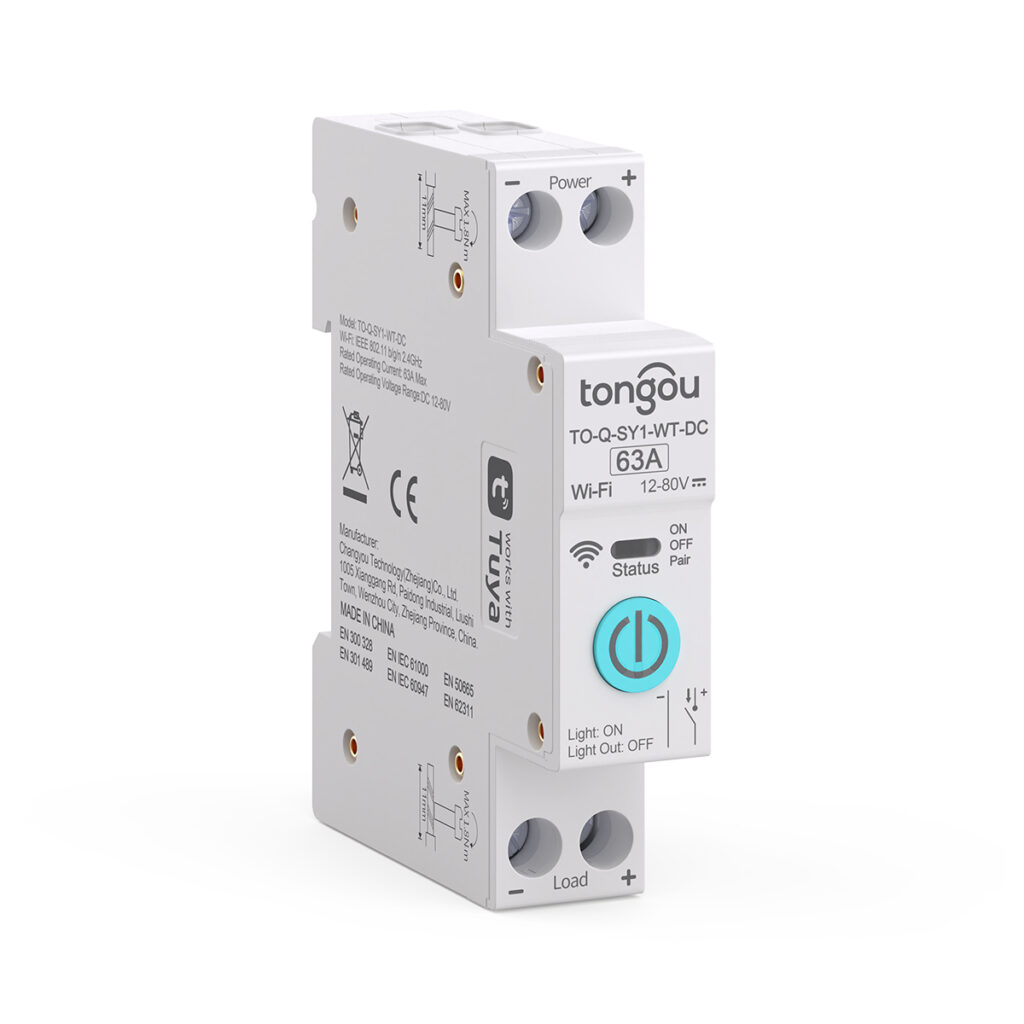
——Current Rating (Amperage): What is the maximum continuous current your load will draw? Choose a switch with a current rating comfortably above this maximum to prevent overheating and nuisance tripping. The Tongou TO-Q-SY1-DC, for instance, comes in various amperage ratings.
——Features Needed: Do you need basic remote on/off, or advanced features like energy monitoring, over/undervoltage protection, or specific smart home ecosystem compatibility?
——Connectivity: Wi-Fi is common for direct smartphone control. Zigbee or Z-Wave might be preferred if you have an existing smart home hub.
Research Brands and Models: Look for reputable brands like Tongou that specialize in electrical safety and smart devices. Read reviews and compare specifications.
Where to Buy:
——Manufacturer Direct: Purchasing from the manufacturer’s website (like Tongou Smart Store) ensures you get genuine products and potentially better support.
Safety First!
——DISCONNECT ALL POWER SOURCES to the circuit before starting any installation work. This includes batteries, solar panels, and any other DC power supplies.
——Use appropriate safety gear (insulated tools, safety glasses).
——If you are not comfortable or experienced with electrical wiring, HIRE A QUALIFIED ELECTRICIAN.
Wiring:
——Consult the manufacturer’s manual for specific wiring diagrams.
——Typically, a DC smart switch will have input terminals (for the DC power source) and output terminals (for the DC load).
——Ensure correct polarity (+ to +, – to -). Reversing polarity can damage the switch or connected devices.
——Use appropriately sized wires for the current rating of the circuit.
Mounting: Most DC smart switches, including DIN rail mountable ones like many from Tongou, are designed for easy installation in an electrical enclosure.
App Connection & Configuration:
——Download the companion app (e.g., Tuya Smart / Smart Life for the Tongou switch).
——Follow the app’s instructions to connect the switch to your Wi-Fi network. This usually involves putting the switch into pairing mode.
——Once connected, you can name the device, set schedules, configure protection parameters (if applicable), and integrate it with voice assistants.
——Testing: After installation and setup, thoroughly test the switch’s functionality – remote control, scheduling, and any protection features.
When looking for a reliable and feature-rich DC smart switch, the Tongou TO-Q-SY1-DC Smart Switch stands out. Tongou is a reputable manufacturer known for its quality electrical components, and this smart switch is a testament to their innovation.
Is a DC smart switch the same as a DC circuit breaker?
No. A DC circuit breaker is mainly used for protection and isolation, while a DC smart switch is mainly used for intelligent control, remote operation, and load management.
Can a DC smart switch replace a traditional DC breaker?
No. A DC smart switch should not be presented as a replacement for a properly selected DC breaker where circuit protection is required.
What is the main value of a DC smart switch?
Its main value is in remote switching, timer control, app-based operation, and smarter management of selected low-voltage DC loads.
Where is a DC smart switch most useful?
It is most useful in applications such as solar battery systems, off-grid setups, RV power systems, marine auxiliary circuits, and 48V backup or telecom branches where intelligent control adds value.
If I need DC circuit protection, what should I choose?
You should choose the properly rated DC protection device required for that circuit. A smart switch can be added for control convenience, but it should not be treated as the core protection device.
Can a DC smart switch be used together with a DC breaker?
Yes. In many real applications, this is the better approach. The breaker handles protection, while the smart switch provides smarter control of the selected branch or load.

How to Choose 30mA, 100mA, or 300mA RCD Protection for Different Applications When selecting an RCD, many buyers and installers focus first on the leakage

Contactor vs Circuit Breaker vs Relay: What Should Control the Load? When you need to control a load, the real question is not which device
What Happens to a Smart Breaker or Smart Energy Meter After a Power Outage? A power outage does not affect every part of a smart
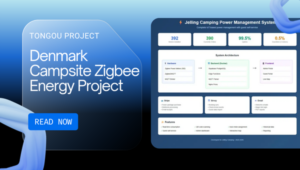
Tongou Project Campsite Energy Management System: Denmark Zigbee Case Study Denmark Campsite Energy Management System with Zigbee Smart Devices Managing electricity across a large campsite

The EU trademark “tongou” (Registration No. 018630309) is owned by Changyou Technology (Zhejiang) Co., Ltd. We position ourselves as providers of intelligent product solutions for high and low voltage electrical systems, taking on solving customers’ pressures and challenges as our responsibility and creating value for them. We utilize intelligent products to serve global customers, making life smarter and more convenient to benefit your life.
Marine Economic Development Demonstration Zone, Wenzhou City, Zhejiang Province, China
Sales: [email protected]
After-sales: [email protected]
© 2026 Changyou Technology. All Rights Reserved.