How to Choose 30mA, 100mA, or 300mA RCD Protection for Different Applications
How to Choose 30mA, 100mA, or 300mA RCD Protection for Different Applications When selecting an RCD, many buyers and installers focus first on the leakage
In every home, office, and industrial facility, invisible guardians quietly keep our environments comfortable, safe, and efficient. They don’t make noise, yet they constantly sense, measure, and respond to the world around us.
These silent workers are temperature and humidity sensors — essential tools for everything from smart homes to greenhouses, laboratories, and factories.
This guide breaks down what these sensors are, how they work, where they’re used, and how to choose the right one for your needs.
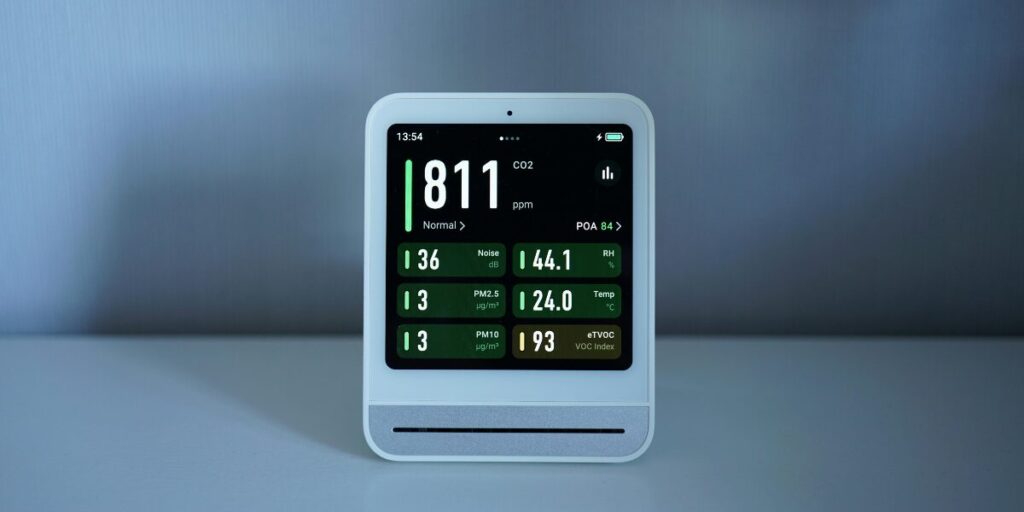
At their core, a temperature and humidity sensor is a compound device that measures both ambient temperature and moisture in the air.
Though often housed together, the device includes two distinct components — a temp sensor and a humidity sensor.
A temp sensor detects the degree of heat or cold in its surroundings and converts it into an electrical signal that other systems can read and process. It helps maintain comfort, safety, and energy efficiency in various environments.
A humidity sensor measures the amount of water vapor in the air. The most common value it provides is relative humidity (RH) — the percentage of moisture in the air compared to the maximum amount that can be held at a given temperature.
Together, they give a complete picture of environmental conditions, making them indispensable in both industrial and everyday applications.
The science behind these sensors lies in materials whose electrical properties change with environmental conditions.
Most temperature sensors operate based on either voltage or resistance changes:
Thermocouples generate a small voltage that varies with temperature.
Thermistors and RTDs (Resistance Temperature Detectors) change their electrical resistance predictably as temperature rises or falls.
A microcontroller then converts this data into an accurate temperature reading.
Humidity sensors rely on how moisture affects a sensing material:
Capacitive humidity sensors use a hygroscopic polymer layer between two electrodes. As humidity increases, the material absorbs water, changing its capacitance — a value directly related to relative humidity.
Resistive humidity sensors use materials whose electrical resistance decreases as they absorb more moisture, providing a simple but effective reading.
Thermistors – Highly sensitive, affordable, and fast-responding. Common in HVAC systems and home appliances.
RTDs (Resistance Temperature Detectors) – Extremely accurate and stable; ideal for laboratories and industrial environments.
Thermocouples – Durable and capable of measuring a wide range of temperatures, perfect for industrial and high-heat scenarios.
Digital Temp Sensors – Compact IC-based sensors found in IoT devices, microcontrollers, and smart systems.
Capacitive Sensors – The most popular, offering accuracy, long life, and stability. Common in HVAC, weather monitoring, and smart homes.
Resistive Sensors – Simple and low-cost, used in consumer products and small devices.
Thermal Conductivity Sensors – Measure absolute humidity, often used in specialized industrial setups.
These sensors have countless applications across homes, industries, and smart systems.
Smart Homes & HVAC Systems – They enable thermostats and automation systems to adjust heating, cooling, and humidity for comfort and energy efficiency.
Agriculture & Greenhouses – Monitor and control growing conditions, ensuring crops thrive.
Data Centers – Protect servers by preventing overheating and moisture buildup.
Healthcare & Pharmaceuticals – Maintain precise storage conditions for vaccines and medical supplies.
Manufacturing & Processing – Control temperature and humidity in food, printing, textile, and electronics production.
Even the most advanced sensor can produce poor data if placed incorrectly. Follow these guidelines for accurate results:
Choose a central, well-ventilated spot – Avoid corners or enclosed spaces.
Keep away from heat sources – Sunlight, lamps, or electronics can distort readings.
Avoid drafts and vents – Airflow can cause fluctuations.
Mount on an interior wall – Provides a stable reflection of the true room condition.
When selecting a temp and humidity sensor or sensor probe, consider the following factors:
Measurement Range – Can it handle the expected temperature and humidity extremes?
Accuracy Requirements – A home monitor may need ±2 °C, while a lab may need ±0.1 °C.
Response Time – For fast-changing environments, prioritize sensors with quick response.
Environmental Conditions – Will it face dust, chemicals, or condensation? Choose durable, sealed probes if so.
Output Type – Analog, digital (I²C, Modbus, RS-485), or wireless—ensure compatibility with your system.
Maintenance and Calibration – Look for long-term stability and easy recalibration options.
Whether you’re building a smart home, maintaining a server room, or monitoring crop environments, temperature and humidity sensors play a vital yet often invisible role. Understanding how they work — and choosing the right one — empowers you to create safer, more efficient, and more comfortable spaces.
Johnson Lim is the General Manager of Changyou Technology and has over 10 years of experience in circuit protection technology and residential electrical safety. He is committed to developing and producing safer and smarter electrical products.

How to Choose 30mA, 100mA, or 300mA RCD Protection for Different Applications When selecting an RCD, many buyers and installers focus first on the leakage

Contactor vs Circuit Breaker vs Relay: What Should Control the Load? When you need to control a load, the real question is not which device

What Happens to a Smart Breaker or Smart Energy Meter After a Power Outage? A power outage does not affect every part of a smart

Chayo Project Campsite Energy Management System: Denmark Zigbee Case Study Denmark Campsite Energy Management System with Zigbee Smart Devices Managing electricity across a large campsite

To address any concerns regarding our logo update, please note that the EU trademarks “tongou” (Registration No. 018630309) and “Chayo” (Registration No. 019312969) are both owned by Changyou Technology (Zhejiang) Co., Ltd.
This logo update is only a visual upgrade and does not affect the ownership, validity, or exclusive use of the above trademarks. It also has no impact on product quality, performance, specifications, after-sales service, or business cooperation.
All products and services remain consistent and reliable as always.
Marine Economic Development Demonstration Zone, Wenzhou City, Zhejiang Province, China
Sales: [email protected]
After-sales: [email protected]
© 2026 Changyou Technology. All Rights Reserved.