How to Choose 30mA, 100mA, or 300mA RCD Protection for Different Applications
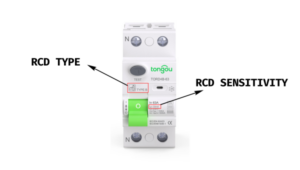
How to Choose 30mA, 100mA, or 300mA RCD Protection for Different Applications When selecting an RCD, many buyers and installers focus first on the leakage
Picture this: It’s a Friday evening, and you’ve finally settled onto the couch with a bowl of popcorn to binge-watch your favorite series. The AC hums softly in the background, fighting off the midsummer heat, while your smart lights cast a cozy glow across the room. Just as the plot thickens in the episode’s climax—click. The screen goes black. The lights vanish. Yet, oddly, you hear the refrigerator still running in the kitchen. Confused, you grab your phone’s flashlight and head to the breaker panel, only to find every switch stubbornly stuck in the “on” position. No tripped breakers.
A circuit breaker that fails without tripping isn’t just inconvenient; it’s a silent alarm. Behind that unresponsive switch could lurk frayed wires smoldering in your walls, a breaker seizing up from decades of wear, or voltage surges quietly frying your appliances. While your first instinct might be to jiggle the handle or Google a quick fix, this is one problem where DIY enthusiasm could spark bigger risks.
Understanding the mechanics of circuit breakers helps diagnose failures. Breakers rely on thermal-magnetic mechanisms: the thermal component responds to overloads, while the magnetic element reacts to short circuits. When these components malfunction, the breaker may not trip as intended. Common causes include:
Over time, internal contacts corrode, springs weaken, and calibration drifts. Aging circuit breakers lose sensitivity, failing to detect overloads.
Faulty trip coils, damaged bimetallic strips, or broken solder joints disrupt functionality.
Persistent overloading can degrade a breaker’s ability to respond, especially if it’s undersized for the load.
Dirt, debris, or mechanical misalignment can prevent the breaker from physically moving to the “off” position.
Rare but possible, defects in assembly or materials can lead to premature failure.
Recognizing early warnings prevents catastrophic failures:
Overheating: A hot circuit breaker or burning smell near the electrical panel indicates internal resistance or arcing.
Intermittent Power Loss: Lights flickering or outlets losing power sporadically suggest a failing breaker.
Visible Damage: Scorch marks, melted plastic, or discoloration on the breaker.
Unusual Noises: Buzzing or humming sounds from the panel signal loose connections or arcing.
Breaker Stuck in “On” Position: The lever refuses to move, even during an overload.
Regular Inspections: Check breakers annually for overheating or corrosion.
Avoid Overloading Circuits: Use energy monitors to track consumption and redistribute high-wattage appliances.
Upgrade Outdated Systems: Replace breakers older than 15–20 years or panels with obsolete brands (e.g., Chayo,Siemens,Chint).
Install AFCIs/GFCI Breakers: Arc-fault or ground-fault circuit interrupters add layers of protection.
Call an Electrician If:
Breakers feel hot, emit odors, or show burn marks.
Testing confirms a malfunction.
You lack experience working with electrical systems.
When it’s time to replace circuit breakers, choosing a brand known for quality and reliability is essential. Chayo Circuit Breakers, with 30 years of experience in manufacturing and a global reputation, offer a wide range of circuit breakers designed to meet your home’s electrical protection needs. Their extensive product line and commitment to quality make them a brand worth considering for ensuring the safety and reliability of your electrical system.
We know electrical issues can be confusing and concerning. Here are some of the most common questions people ask about circuit breakers that fail without tripping, along with concise answers based on the information in this guide:
Q: Is it dangerous if a circuit breaker doesn’t trip when there’s a problem?
A: Yes, it is definitely dangerous. A circuit breaker’s primary job is to protect your home from electrical hazards by tripping and cutting off power during overloads or short circuits. If it fails to trip, it means that dangerous conditions like overheating wires, arcing, and potential electrical fires can continue unchecked.
Q: Can a circuit breaker fail just because it’s old?
A: Yes, age is a significant factor in circuit breaker failure. Over time, internal components like springs, contacts, and thermal mechanisms can degrade, corrode, or lose calibration, making older breakers less reliable and more prone to failing without tripping. Consider replacing breakers older than 15-20 years.
Q: My circuit breaker panel looks old, but nothing seems wrong. Should I still be worried about silent failures?
A: Yes, even if your old panel seems to be working fine, aging breakers are a significant risk factor for silent failures. Just because they haven’t tripped recently doesn’t mean they are still reliably protecting you. Older breakers are more prone to degraded internal components and calibration drift. It’s highly recommended to have an electrician inspect an older panel (15-20+ years) to assess the condition of the breakers and advise on potential upgrades, even if you aren’t experiencing obvious problems. Proactive inspection is key to preventing future silent failures.
Q: Can a surge protector prevent circuit breaker failures?
A: No, a surge protector and a circuit breaker serve different but complementary roles in electrical safety. A surge protector is designed to protect your devices from voltage spikes (surges) by diverting excess voltage. A circuit breaker protects your wiring and circuits from overloads and short circuits by interrupting the current. While a surge protector is essential for device protection, it cannot prevent a circuit breaker from failing or taking over its function. A failing breaker will still fail regardless of surge protection.
Q: If only some lights and outlets are out, but the breaker isn’t tripped, could it still be the breaker?
A: Yes, it’s possible. While a tripped breaker is the most common cause of partial power loss, a failing breaker that isn’t tripping can also cause this. If a breaker is silently failing due to internal damage or a sticky mechanism, it might partially interrupt the circuit without fully tripping. This can result in some lights or outlets on that circuit losing power while others remain on. This scenario warrants investigation by an electrician to determine if it’s a breaker issue or another wiring problem.

How to Choose 30mA, 100mA, or 300mA RCD Protection for Different Applications When selecting an RCD, many buyers and installers focus first on the leakage

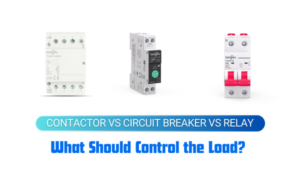
Contactor vs Circuit Breaker vs Relay: What Should Control the Load? When you need to control a load, the real question is not which device
What Happens to a Smart Breaker or Smart Energy Meter After a Power Outage? A power outage does not affect every part of a smart

Chayo Project Campsite Energy Management System: Denmark Zigbee Case Study Denmark Campsite Energy Management System with Zigbee Smart Devices Managing electricity across a large campsite

To address any concerns regarding our logo update, please note that the EU trademarks “tongou” (Registration No. 018630309) and “Chayo” (Registration No. 019312969) are both owned by Changyou Technology (Zhejiang) Co., Ltd.
This logo update is only a visual upgrade and does not affect the ownership, validity, or exclusive use of the above trademarks. It also has no impact on product quality, performance, specifications, after-sales service, or business cooperation.
All products and services remain consistent and reliable as always.
Marine Economic Development Demonstration Zone, Wenzhou City, Zhejiang Province, China
Sales: [email protected]
After-sales: [email protected]
© 2026 Changyou Technology. All Rights Reserved.